

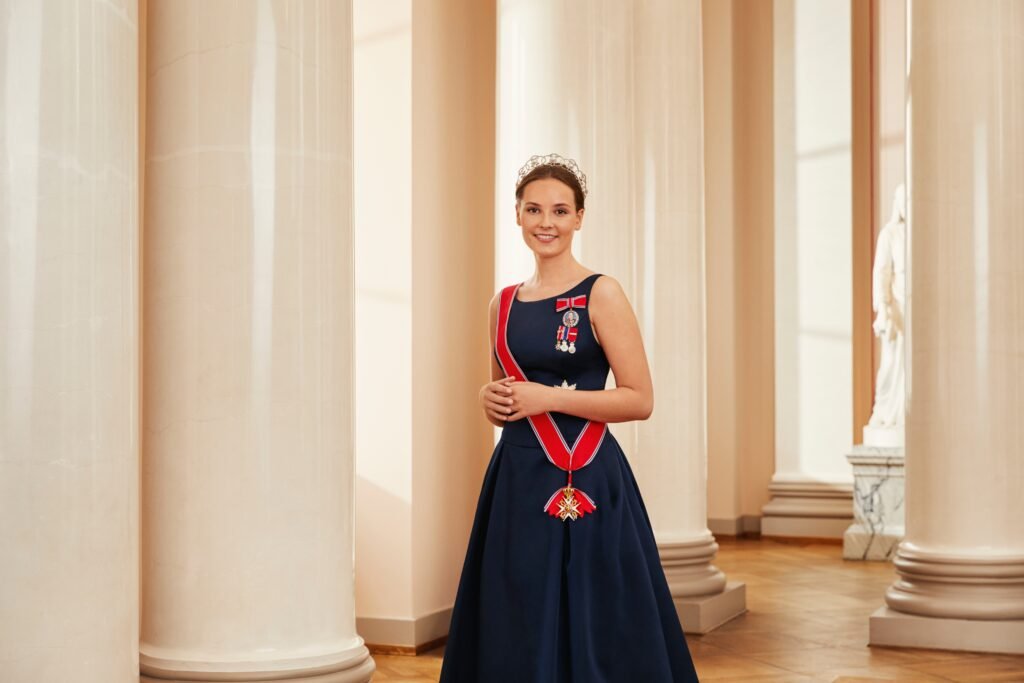
The death of King Harald V has brought more than just a change on the Norwegian throne. When Haakon VIII became king, his 22-year-old daughter Ingrid Alexandra became Crown Princess – kronprinsesse – and first in line to the throne. Norway has thus taken another step toward something it has never experienced in its modern history: in the future, a woman will become head of state by inheriting the crown under the same rules as a man. Before that happens, however, Ingrid Alexandra is facing another historic moment – taking a written oath before Parliament.
On Friday, August 28, with the death of King Harald V, Norway’s line of succession changed. Haakon automatically became King Haakon VIII, while his eldest daughter – previously Princess Ingrid Alexandra – received the title of Crown Princess.
The 22-year-old Ingrid Alexandra is now the direct heir to the Norwegian throne.
This is also a significant moment in the history of the Norwegian monarchy. An amendment to the Constitution adopted by Storting (Norwegian parliament) on May 29, 1990, introduced the principle that succession is determined by the age of the child rather than gender. Ingrid Alexandra is the first member of the royal family for whom this change has a direct bearing on the path to the crown.
A Woman Can Become Queen of Norway
For much of history in the Norwegian monarchy, men had priority in the line of succession. That changed in 1990, when it was decided that age, rather than gender, would determine the order of succession, however, the change was not applied fully retroactively. For people born before the new rules came into force, the previous rules remained in place.
That is why Haakon, rather than his older sister Märtha Louise, became heir to King Harald.
Ingrid Alexandra was born in 2004, after the change in the rules. When her younger brother Sverre Magnus was born on December 3, 2005, he did not overtake his sister in the line of succession simply because he was male.
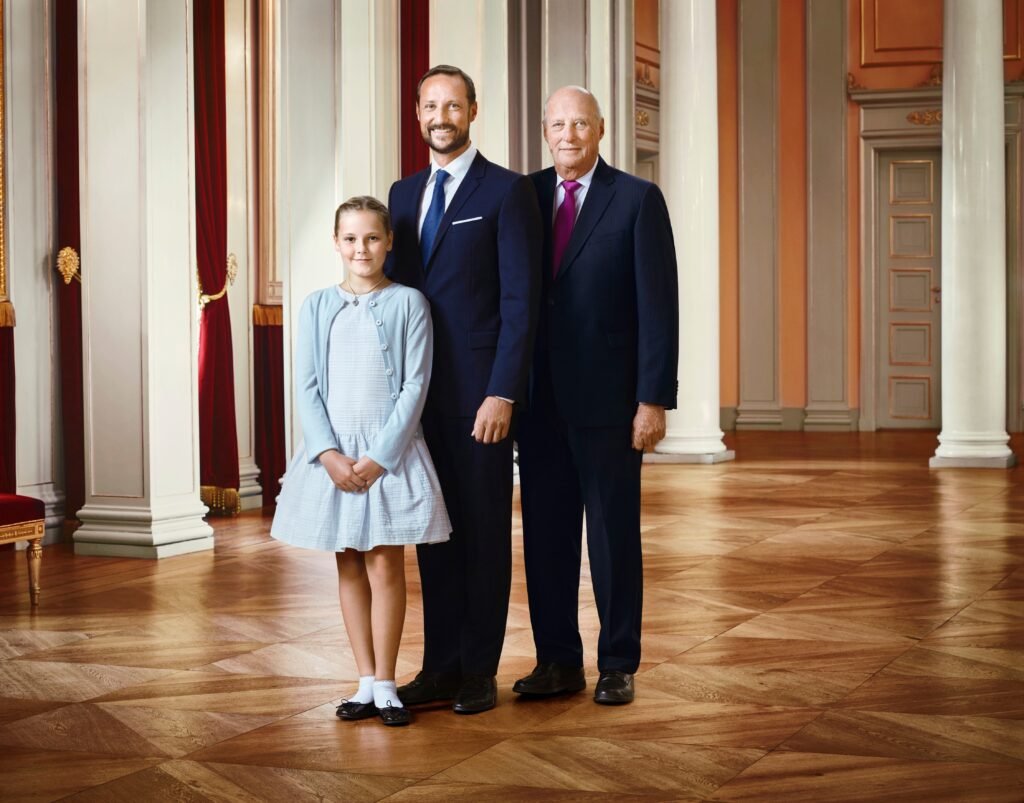
As of August 28, 2026, Ingrid Alexandra was first in line to the crown. If she eventually ascends the throne, Norway will have a female monarch as a result of the current principle of equal succession to the crown.
But First, a Historic Oath
The change on the throne has created another unprecedented situation in Norway’s modern history.
The death of King Harald V is the first case in modern Norwegian history in which, at the time of a change of monarch, the person immediately behind the heir to the throne is already an adult. Under the constitutional procedures governing succession, Ingrid Alexandra will submit a written oath before Storting.
This is different from previous changes on the Norwegian throne. When King Olav reached adulthood in 1924, his father, Haakon VII, had already been king for many years. The same was true of Harald, who came of age in 1958, and Haakon, who reached adulthood in 1991. Each of them took the relevant oath after reaching adulthood.
In Ingrid Alexandra’s case, this moment coincides with a change of monarch.
Who Is Norway’s Future Queen?
Ingrid Alexandra was born on January 21, 2004, at Rikshospitalet in Oslo. She is the eldest child of Haakon VIII and Queen Mette-Marit. She grew up at Skaugum in Asker – the historic estate that has been home to the family of the heir to the Norwegian throne for generations.
From the beginning, her childhood combined two worlds: preparation for her future role in the monarchy and an attempt to give her as ordinary a life as possible as a young Norwegian.
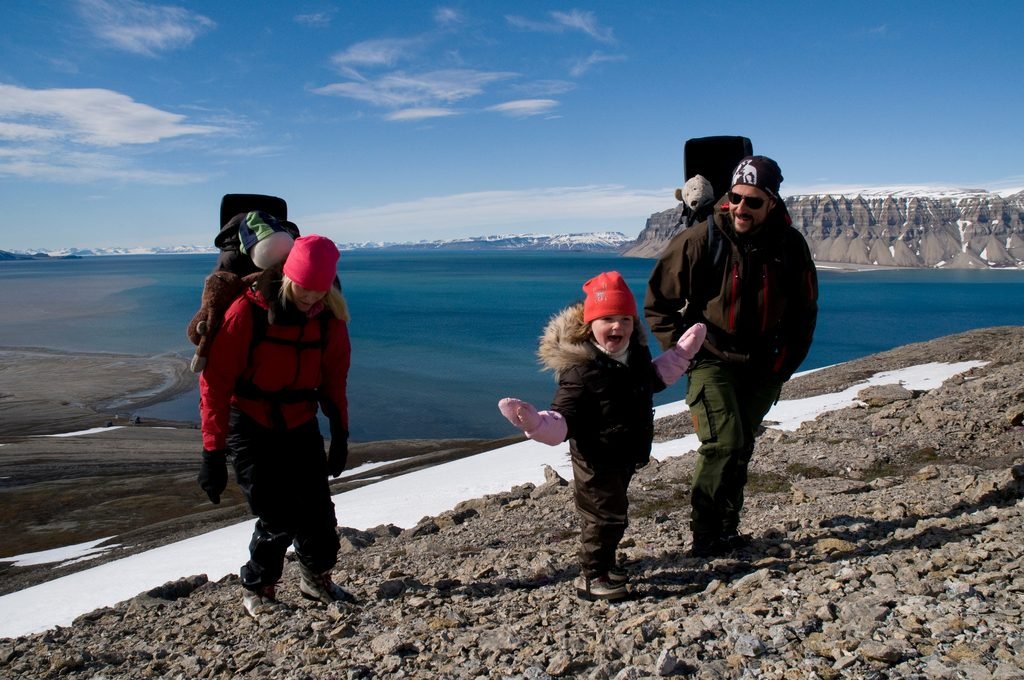
In 2010, she began attending the local Jansløkka primary school in Asker. Crown Prince Haakon and Mette-Marit wanted Ingrid Alexandra to have as ordinary a childhood as possible and to maintain contact with peers outside the royal environment. Her enrollment at Jansløkka was historic in its own right – she was the first direct heir to the Norwegian throne to attend an ordinary local public school.
She later attended, among others, the International School of Oslo and Uranienborg, a public school for children and young people in the prestigious Frogner district of Oslo. She completed upper secondary school at Elvebakken in Oslo in 2023.
Even as a child, however, she appeared at some of the most important events involving the royal family.
Her Grandfather Carried Her to Her Baptism
Ingrid Alexandra was baptized on April 17, 2004, in the chapel of the Royal Palace – Slottskapellet – and was carried to the baptismal font by her grandfather, King Harald V.
Her godparents included representatives of several European royal families: the current King of Spain, Felipe VI, Princess Victoria of Sweden, and the current King of Denmark, Frederik X. Princess Märtha Louise and Ingrid Alexandra’s grandmother, Marit Tjessem, were also named as godparents.
Her confirmation took place in the same Slottskapellet on August 31, 2019.
Her First Royal Duties as a Child
One of Ingrid Alexandra’s first official appearances outside traditional events, such as Norway’s Constitution Day on May 17, took place as early as 2009. The five-year-old princess attended World Environment Day celebrations and met a parade organized by Miljøagentene at Slottsplassen.
She received her first independent official assignment in 2015 when, at the age of 11, she christened a new rescue boat operated by the Norwegian Society for Sea Rescue (Redningsselskapet) named “Elias.” A year later, during the opening ceremony of the Winter Youth Olympic Games in Lillehammer, she lit the Olympic flame in front of around 13,000 spectators.
In 2018, she christened the Norwegian research vessel Kronprins Haakon, named after her father.
She Received Her Own Office at the Palace on Her 18th Birthday
A symbolic milestone in Ingrid Alexandra’s preparation for her future role came on her 18th birthday, January 21, 2022. After reaching adulthood, she was given her own office at the Royal Palace.
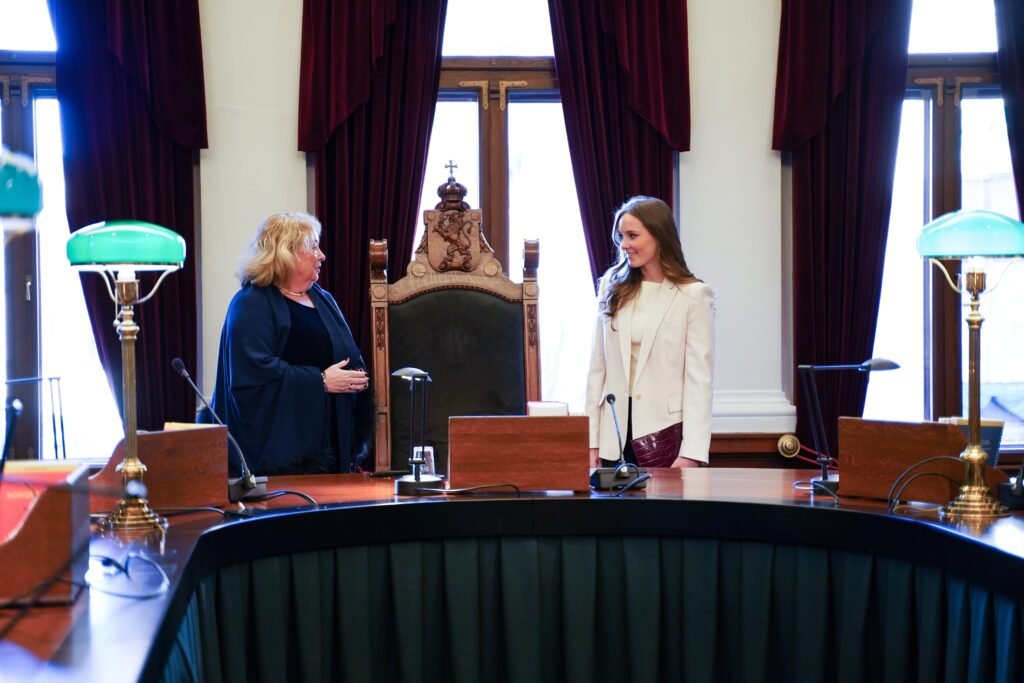
She gradually began taking on more representative duties, although the Royal Court consistently emphasized that her main priority in the coming years should remain her education.
In April 2025, she took part in an official program connected with a state visit for the first time.
15 Months in the Military
Military service was another important stage in Ingrid Alexandra’s preparation.
In 2024–2025, she completed 15 months of compulsory military service with the Engineer Battalion (Ingeniørbataljonen) of Brigade Nord, based at Skjold camp in Målselv in northern Norway. In the military, she was simply Private Alexandra.

She completed an eight-week recruit training period covering basic soldiering skills, field operations and survival in challenging conditions. She was then trained as a gunner in the crew of a CV90 engineering vehicle. She completed her military service on April 4, 2025.
Australia, International Relations and Political Economy
After the military came university. In August 2025, Ingrid Alexandra began a three-year bachelor’s degree in social sciences at the University of Sydney in Australia.
She chose two fields that can hardly be considered accidental for a future head of state: international relations and political economy. From autumn 2026, however, she began studying in Norway. As part of an exchange arrangement with the University of Sydney, she became a student at the Faculty of Social Sciences at the University of Oslo, where she is studying subjects including comparative politics and conflict resolution.

The Royal Court emphasizes that her studies are still intended to be her main occupation, although she may undertake selected official duties when her studies allow.
Ingrid Alexandra has also been involved in sports and friluftsliv – outdoor life – for many years. The Royal Court says she is particularly interested in skiing and water sports. These are interests she shares with other members of her family.
For many years, her parents have sought to provide her with as normal a childhood and education as possible, despite the fact that from the moment she was born, it was known that she might one day become queen.
Her Role Has Changed Since August 28
Until now, Ingrid Alexandra could be prepared for her future role as monarch with the prospect of many years before her.
The death of King Harald, however, immediately changed the hierarchy of the royal family.
Her father is now king, and she is the heir to the throne.
The change also has constitutional significance. As Crown Princess, Ingrid Alexandra may accompany her father at meetings of the Council of State. The Constitution also provides for the heir to the throne to serve as regent when the monarch is ill or abroad.
This does not mean that the 22-year-old will suddenly abandon her studies and become a full-time representative of the monarchy. Her official biography published by the Royal Court continues to emphasize that, in the coming years, her main priority will remain her education.
But something fundamental has changed: Ingrid Alexandra is no longer simply someone who may one day move to the front of the line of succession. Ahead of her are university studies, gradually taking on more responsibilities and constitutional ceremonies connected with her new role – and, further in the future, if the succession proceeds under the current order, the Norwegian throne.