
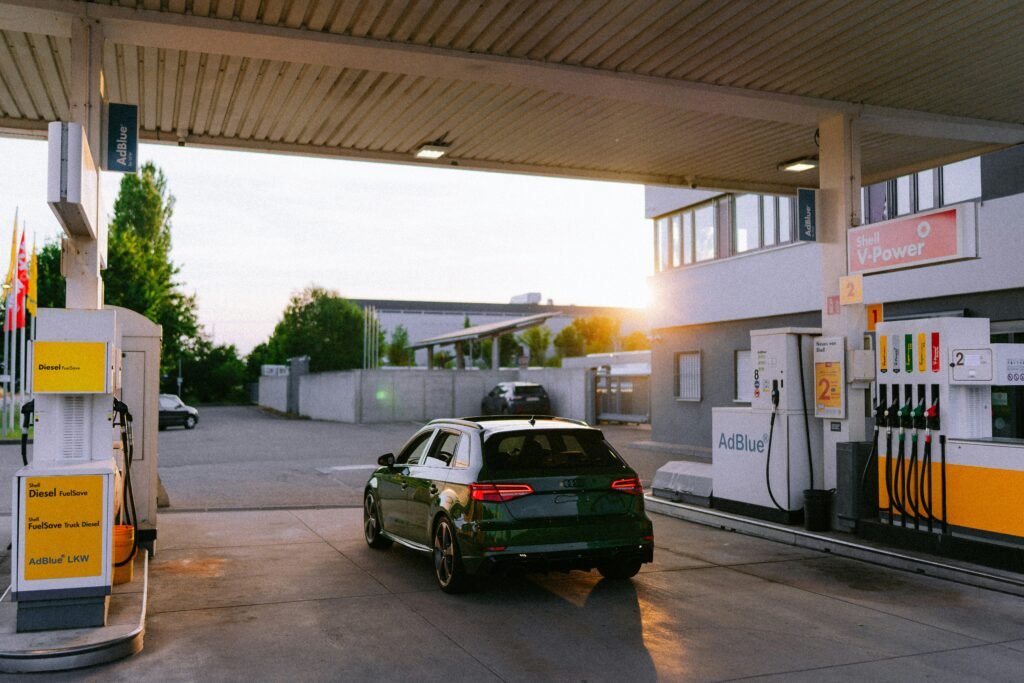
Fuel prices in Norway will rise from September 1, when temporary tax cuts introduced in the spring come to an end. The return of the taxes could increase the price of petrol by as much as NOK 4.41 per litre.
Drivers in Norway should prepare for higher fuel prices. The temporary tax cuts introduced in the spring end overnight from Monday to Tuesday. The return of the taxes could increase the price of petrol at the pump by around NOK 4.41 per litre. For diesel, the return of the veibruksavgift (road usage tax) alone means an increase of around NOK 2.85 per litre. Drivers planning to refuel may therefore want to consider filling up on Monday.
From September 1, the temporary reduction in fuel taxes that has been in effect since spring will end. The rates will return to the levels that applied before the emergency cuts were introduced.
Petrol and diesel drivers will feel the impact most directly.
From Tuesday, the veibruksavgift, or road usage tax, will once again be:
- NOK 3.77 per litre of petrol
- NOK 2.28 per litre of diesel
From April 1 through the end of August, the rate of this tax was zero.
This does not mean, however, that petrol at every station will automatically become exactly NOK 3.77 more expensive, or diesel NOK 2.28 more expensive.
Petrol could rise by around NOK 4.41 per litre
The Norwegian Ministry of Finance previously calculated how the temporary removal of the tax could affect the price displayed at the pump.
For a typical petrol blend consisting of 85 per cent fossil petrol and 15 per cent bioethanol, the tax reduction lowered the cost by around NOK 3.53 per litre. Including VAT, this amounted to a difference of around NOK 4.41 in the retail price – provided that the entire tax reduction was passed on to customers.
Now the mechanism works in reverse. If the tax is fully reflected in the retail price, petrol could cost around NOK 4.41 more per litre. Filling a 50-litre tank would therefore mean an additional cost of around NOK 220.50.
Diesel – more than one tax is involved
For diesel, the return of the veibruksavgift at NOK 2.28 per litre means a potential increase of around NOK 2.85 per litre at the pump, including VAT.
For a 50-litre fill-up, that amounts to around NOK 142.50.
From May 1, the CO₂ tax on automotive diesel was also temporarily reduced. It was NOK 3.09 per litre instead of the usual NOK 4.42. From September 1, this relief will also end and the rate will return to NOK 4.42 per litre.
The actual change in diesel prices at filling stations may therefore depend on several factors, not just the reinstatement of the veibruksavgift.
Why were the taxes reduced?
The decision to temporarily reduce the taxes was made by Storting in March following a sharp rise in fuel prices linked to the situation in the Middle East.
The reduction was pushed through by opposition parties together with the Centre Party (Senterpartiet), against the government’s position.
The veibruksavgift was set to zero from April 1 through the end of August. For some types of fuel, the CO₂ tax was also reduced.
Before the temporary measures expired, the Progress Party (Frp) and the Centre Party attempted to extend them. However, they failed to secure a majority in Storting.
As a result, August 31 is the final day on which the reduced rates apply.
How much does fuel currently cost?
Data from Statistics Norway (SSB) show how significantly fuel prices have changed in recent months.
In March, before the veibruksavgift was reduced to zero, the average prices were:
- 95-octane petrol: NOK 23.50/litre
- Diesel: NOK 24.54/litre
In April, the average petrol price fell to NOK 19.32, and in May to NOK 19.15.
According to the latest monthly SSB data, in July 2026 drivers paid an average of:
- 95-octane petrol: NOK 19.59/litre
- Diesel: NOK 20.25/litre
This means that the average petrol price in July was NOK 3.91 per litre lower than in March. For diesel, the difference was NOK 4.29.
However, the entire difference cannot be attributed to taxes. Fuel prices are also affected by factors including crude oil and refined fuel prices, the exchange rate of the Norwegian krone, distribution costs and the pricing policies of individual fuel chains.
How much more could a full tank cost?
If the Ministry of Finance’s estimated impact of the return of the veibruksavgift on retail prices is applied, the difference becomes particularly noticeable when filling a full tank.
Petrol:
- 40 litres – around NOK 176 more
- 50 litres – around NOK 221 more
- 60 litres – around NOK 265 more
Diesel – based solely on the impact of the returning veibruksavgift:
- 40 litres – around NOK 114 more
- 50 litres – around NOK 143 more
- 60 litres – around NOK 171 more
For diesel, it is also important to remember that the temporary reduction in the CO₂ tax is ending.
The increases will affect more than just cars
The end of the temporary tax relief will also affect other industries.
Storting temporarily reduced taxes on, among other things, diesel used in machinery and construction, fuel used by the fishing industry and parts of domestic shipping.
From September 1, these rates will also return to their previous levels.
For most people in Norway, however, the most visible change will be the prices displayed at fuel stations.
It is important to remember that taxes are only one component of the final fuel price. It is therefore impossible to guarantee that every station will raise its prices on Tuesday morning by exactly the amounts resulting from the tax changes.
One thing is certain: the period of extraordinary tax relief ends at midnight between August 31 and September 1.