
The government wants to abolish refugees’ right to social assistance and housing benefits in order to push more of them into employment.
Drastic changes
The proposed measures represent the largest reform in 20 years, according to public
broadcaster NRK.
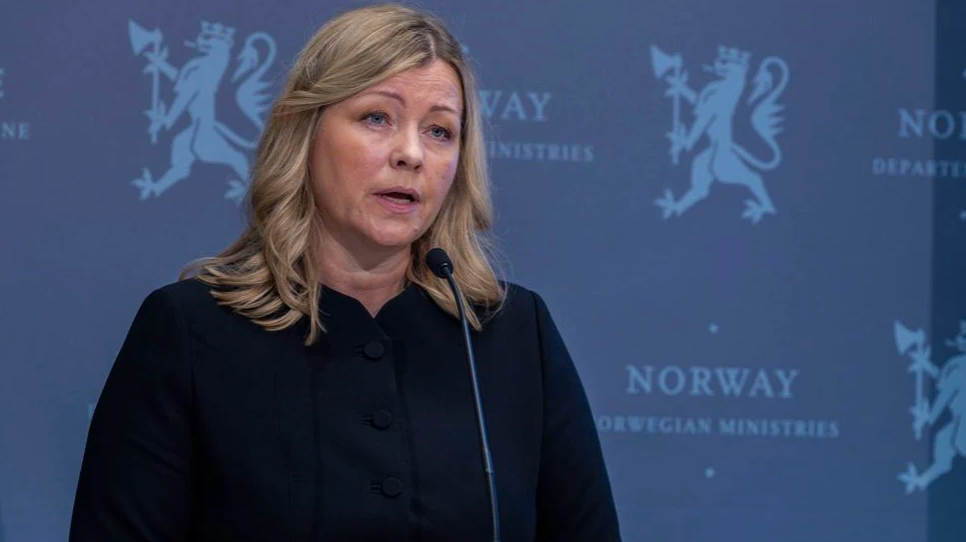
Minister of Labour and Integration Kjersti Stenseng (Labour Party – Ap) said the plan includes
lower integration benefits combined with a strict activity requirement.
“If we are to succeed with integration in the future and safeguard the welfare state, more
refugees must enter the labour market,” Stenseng said.
Benefits system to be dismantled
The government plans to dismantle the current system of the introduction benefit, social
assistance, and housing allowances for newly arrived refugees. These will be replaced by a
single new benefit.
The proposal has been sent out for consultation. If approved, the changes would come into
force no earlier than January 2028. The main idea is to reduce financial support to a level
where moving from benefits to work is always clearly felt in household finances.
Strict activity requirement
The government wants the integration benefit to be closely tied to an activity requirement.
Until now, participation in Norwegian language courses has been considered sufficient
activity. This is set to change.
After completing the standard integration programme, refugees will be expected to take up
work or continue education. If they fail to do so, they will be required to attend daily
activities to retain their entitlement to benefits. In cases of unjustified absence, payments will
be immediately reduced.
In addition, an automatic mechanism will be introduced to gradually reduce the benefit after
one year and again after three years, in order to increase pressure to find paid employment.
“Taking up work benefits the individual by enabling them to support themselves and their
family. It also provides language practice and a sense of belonging in society,” Stenseng said.
The proposal includes:
- A new integration benefit with fixed rates for newly arrived refugees who are not self-sufficient. For most, this will mean lower support than today, but greater financial incentives to work.
- The system will apply for five years from the time a refugee is settled in a municipality.
- No entitlement to social assistance or housing benefits (municipal or state) during this period.
- The benefit will be individually calculated based on fixed rates, depending on marital status, number of children, age, and municipality of residence.
- Child benefits and an additional allowance for single parents.
- Benefits will be reduced in cases of personal assets, income from work, or educational support.
- The introduction programme will continue but under a new name: the integration programme.
- An activity requirement for those who, after completing the integration programme, have not entered work or education.
- Benefits will be reduced in cases of unjustified absence from the integration programme or failure to comply with the activity requirement.
Source: Regjering.no
Rising number of refugees, municipalities under pressure
Some municipalities are refusing to accept new refugees. For example, the municipality of
Fredrikstad will not accept new refugees for the second year in a row, while Moss has agreed
to take only half of the proposed number. Sarpsborg Mayor Magnus Arnesen (Conservative Party – Høyre) pointed out that as much as 80 percent of the municipality’s social assistance budget is
spent on refugees.
At the same time, the Norwegian Directorate of Immigration (UDI) expects an increase in
asylum applications to Norway in 2026. According to the agency’s director, Snorre Sæther,
UDI estimates a total of 18,500 applications for protection in 2026—an increase compared to
the previous year. Of these, 14,500 are expected to come from Ukraine.
Sæther notes that this will create additional challenges.
“There will be more people staying long-term in reception centres, and there will be a need
for more such centres,” he said.